Agro Parks
Our commitment to agricultural production and enhanced productivity has resulted in the successful management of nine (9) Agro Parks and ten (10) Production Zones, covering a vast total area of approximately 8,600 acres dedicated to agricultural excellence.
Our Agro Parks and their locations:
| Plantain Garden River (St. Thomas) | Amity Hall (St. Catherine) |
| Ebony Park (Clarendon) | Spring Plain (Clarendon) |
| Holland Estates (St. Elizabeth) | Mango Agro Park (Clarendon) |
| Yallahs (St. Thomas) – Private Agro Park | Parnassus (Clarendon) |
New Forest/Duff House (Manchester) – Private Agro Park |
Parnassus Agro Park – Clarendon
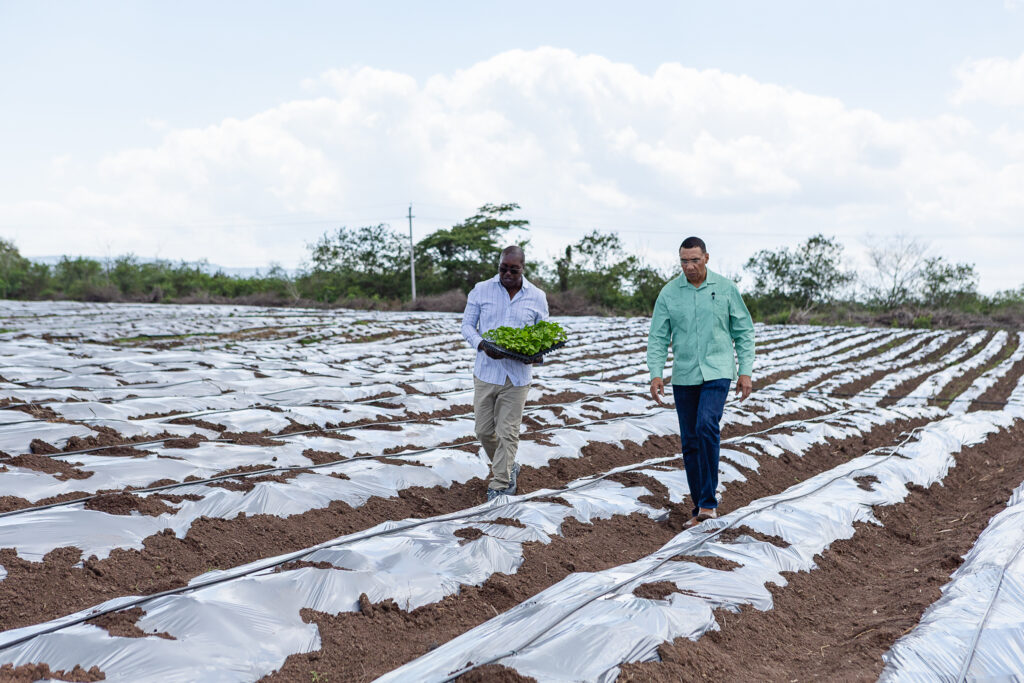
Parnassus Agro Park, recently launched in Clarendon on April 23, 2025, represents a key milestone in the Corporation’s ongoing efforts to expand agricultural output and attract private investment. This initiative, part of the Southern Plains Agricultural Development Project (SPADP), is jointly led by Agro-Invest and the National Irrigation Commission (NIC), with strategic funding from the Government of Jamaica, UK Caribbean Infrastructure Fund (UKCIF), and Caribbean Development Bank (CDB).
• UKCIF: £16.7 million (grant) administered through the Caribbean Development Bank (CDB).
The Parnassus Agro Park is a key development site within the SPADP. It is designed to transform former sugarcane lands into productive, investment-ready zones with modern agricultural infrastructure aimed at increasing food production, creating jobs, boosting exports, and ensuring climate resilience.
Project Highlights:
• Size: 776 acres in Parnassus, Clarendon
• Leased Land: leased to 42 investors
- 159.5 acres allocated to 23 former informal occupants, now formalized
- remaining acres allocated to new investors
- 37.6% of leases awarded to women, youth, and persons with disabilities (PWDs)
• Crops: Hot peppers, sweet potatoes, cassava, onions, ginger, pumpkin, tree crops
• Infrastructure: Climate-resilient roads, drainage systems, flood control, and irrigation
• Support Mechanisms: Matching Grant Scheme (MGS), Cluster Coordinators, Technology Transfer Specialists, and soon-to-be-appointed Park Manager
Impact:
• Job Creation: Opportunities in farming, logistics, and Agro-Processing
• Food Security: Expansion of domestic crop production
• Export Capacity: Positions Jamaica to increase regional and global exports
• Inclusion: Enables full participation of vulnerable and marginalized groups
Plantain Garden River (PGR) Agro Park – St. Thomas
Located in eastern St. Thomas, the Plantain Garden River (PGR) Agro-Park sits on 253 acres of prime agricultural lands, of which 122 acres are irrigated, all 253 acres have been leased to over 70 investors. This Agro-Park is suited to the production of a wide array of crops from roots and tubers to herbs and spices.
The predominant soil types are golden grove sandy clay loam, killancholly clay loam, caron hall clay loam, Winchester sandy clay loam, bonny gate stoney loam and serge island sandy clay loam. Investors at this location are encouraged to produce pumpkins, hot peppers, irish potatoes and bananas to tap into unfulfilled local demand. Herbs and spices – especially ginger, is known to do extremely well on this Agro-Park.
Yallahs Agro Park – St. Thomas
The Yallahs Agro-Park located in the southwestern section of St. Thomas, was developed and implemented by the government of Jamaica through its Agricultural Competitiveness Programme (ACE). This programme was developed to build out agriculture, irrigation advocacy and supply chain systems that would be able to develop economies of scale in the Yallahs valley area and create employment and growth of the agriculture sector. The Agro Park sits on 873 acres of land, where at least four community clusters have access to water resources, namely East Albion, Heartease, Norris and Phillips Field.
The predominant soil types are sandy and sandy loam, deal for crop production such as vegetables, condiments and orchard crops. Due to the Agro-Park’s proximity to the sea, the planting of barrier crops and orchard crops which adds much value to the Agro-Park are necessary to break the wind that may have deleterious effects on fibrous root systems.
Amity Hall Agro-Park – St. Catherine
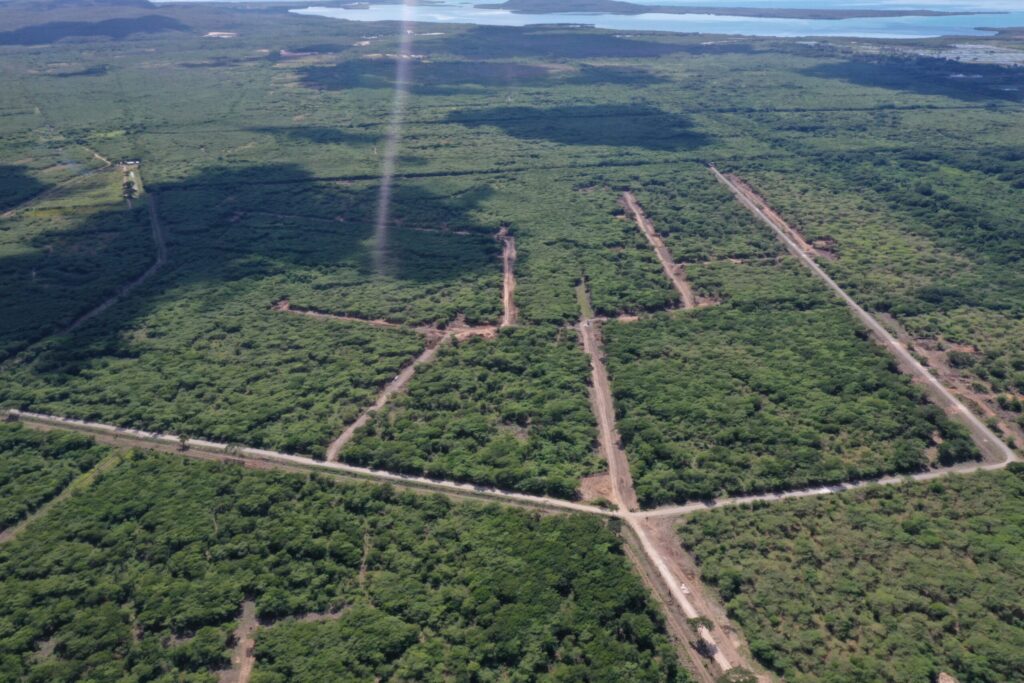
Sitting on the major arterial access to the main aggregation points in the logistics hub, the Amity Hall Agro-Park in St. Catherine provides the catalyst for investors who are seeking to integrate primary production with value added and export trade.
The predominant soil type is Sydenham clay. Crops known to do well based on the existing climatic conditions and soil type include: cucurbits (watermelon, cantaloupe, zucchini, and squash), hot peppers and okra – all highly demanded by the hotel and food service industries. Roots and tubers, especially sweet potatoes, do well on this Agro-Park. The land is suitable for development of integrated agro-industrial systems as the wide expanse of 2,340 acres allows for the possibility for production at scale to provide throughput for agro-processing.
Spring Plain and Ebony Agro-Parks – Clarendon
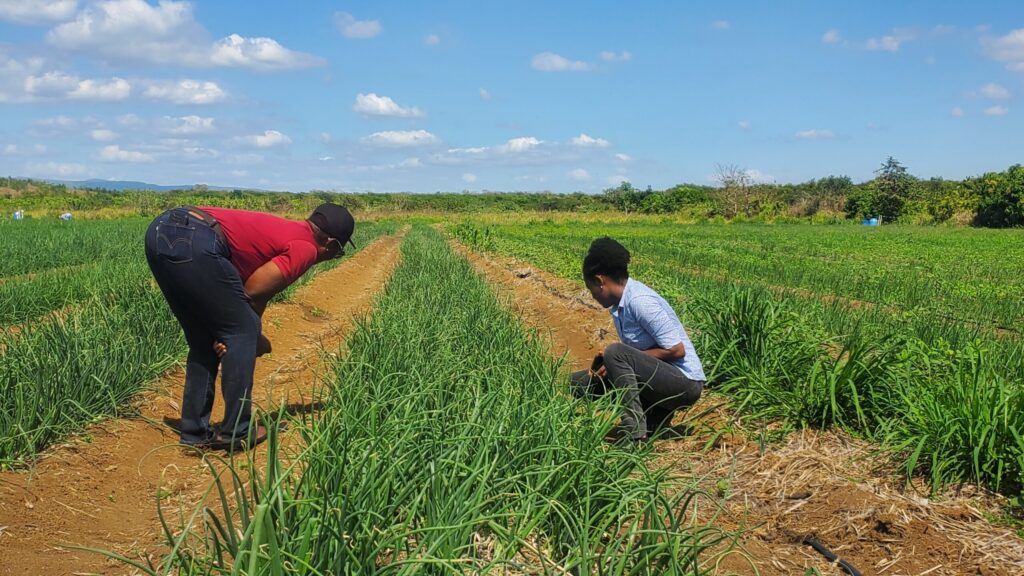
The Spring Plain and Ebony Agro-Parks are adjoining properties situated off the Toll Gate Main Road in Clarendon. The properties are approximately 15km from the parish capital May Pen and 55km from Kingston, the country’s major commercial district.
The soil types at these locations are predominantly clay and clay loams which are derived from the deposits of the Rio Minho and Milk rivers. A mix of bonny gate stoney loam, st toolies and four paths loam are the most popular.
The 1,197 acres of lands at Ebony Park and 944 acres in Spring Plain are suited to the production of tubers, cucurbits, orchard crop such as fruit trees (mangoes, otaheite apples, papaya, and breadfruit), condiments and vegetables.
Both parks are best suited for investors who require upwards of 20 acres of land for production.
New Forest and Duff House Agro-Parks – Manchester/St. Elizabeth
The New Forest and Duff House area is located in a long valley inland from the Alligator Pond coastline in Manchester bordering St. Elizabeth. The area is surrounded to the north, east and west by steep hills. The terrain is generally uniform but rises steeply at the southern boundary line along the top of a terrace above the narrow coastal plain. The Agro Park is situated approximately 55km and 40km from the towns of Mandeville and Santa Cruz respectively. The road network between the Agro Park and these two major towns are in good condition, therefore inputs and materials for production can be accessed and transported readily.
Ninety per cent (90%) of the targeted farmers own their own farm plots, while six per cent (6%) are utilising leased lands; the remaining four per cent farm on family lands for which no rent is paid. The New Forest Duff House Water Users Association (farmers group) has been in existence for over twelve years and is the main farmers group in the area.
The New Forest Duff House Agro Park is best suited to cultivate the following crops; hot peppers, escallion thyme, water melon, pumpkin, cauliflower, broccoli, cabbage, cucumber, sweet pepper and hot pepper.
The soil in the New Forest Duff House Agro Park area is classified as class 3. This class means that the land is good for agricultural production, but it requires moderate to intense conservation and management practices. With respect to soil type; the area selected for cultivation is dominated by the St. Ann Clay Loam. This soil type has a medium depth of 12- 18 inches and is suitable for the production of crops targeted for cultivation in the Agro Park. The areas which are not targeted for crop cultivation consist of rocks and Bonny Gate Stony Clay. This is a thin and stony soil and is non-arable.
New Forest Duff House has 880 acres of arable lands but only 288 acres are being cultivated presently. Over the years, the area has demonstrated its suitability for agricultural production, thus the need to target an additional 499 acres of land for the specific crops mentioned above.
Holland Estates – St. Elizabeth
The Holland property was transferred under the management of the Agro-Investment Corporation (AIC) which has the mandate to package, promote and facilitate investment opportunities in Agriculture.
The property which is approximately 935.52 hectares (2400 acres) will be developed into an Agro-Economic Zone, which is the central point for agri-business development in the parish. This Agro-Economic Zone will promote economies of scale (large scale production) and economies of scope (diversification of production) at each point along the value chain. The Agro-Economic Zone will create an environment where advanced technologies will be integrated into the existing systems, to boost production and productivity.
Value Chain Expansion
The value chain will be developed to include the following:
- Continuous research and development
- Inputs of the highest quality
- Good agricultural practices for crop production
- Efficient harvesting techniques
- Robust storage facilities (cold and dry)
- Efficient and effective transportation services
- Innovative and scientific agro-processing techniques
- Sustainable waste management practices
- Effective and innovative marketing strategies
Benefits of the Holland Property as an Agro Economic Zone
The Agro-Economic Zone (AEZ) will attract and retain profitable investors while providing support services that will make them competitive both locally and internationally. All the activities conducted in the zone will be geared towards food security, job creation, rural development, and economic growth. In addition, there will be introduction of climate smart agriculture and technologies, and a fully integrated value chain system which will potentially lead to overall sustainable national development of the country.
Investment in the Pipeline for Holland
There are approximately 230 investors/farmers interviewed and placed on the property and with the support of the Agro Invest Corporation many of these farmers have already commenced production or are preparing for production.
The 2400-acre zone will comprise farms, as well as packaging and processing facilities. The project is expected to provide jobs for over 900 persons.
OUR PRODUCTION ZONES
| Hazelymph Production Zone – St. James | New Pen Production Zone – St. Mary |
| Lennox/Low Leyton Production Zone – Portland | Rhymesbury Production Zone – Clarendon |
| Hinds Town Production Zone – St. Ann | Wallens Production Zone – St. Catherine |
| Enfield Production Zone – Westmoreland | Nonsuch/Unity Production Zone – St. Mary |
| Hermitage Production Zone – St. Ann | Fort George Production Zone – St. Mary |
| New River Production Zone – St. Elizabeth | Dundee Production Zone – Trelawny |
| Harmony Hall/Mount Pleasant Production Zone – St. Ann |
The Agro-Investment Corporation continues to play a pivotal role in advancing Jamaica’s agricultural landscape through the strategic management and development of its Production Zones, which are large parcels of land dedicated to structured and sustainable farming. Within these zones, farmers operate in organized groups that promote efficiency, collaboration, and increased productivity. They benefit from continuous technical and institutional support, including business planning, market linkage facilitation, access to grant funding, and expert guidance on crop selection and scheduling. This comprehensive support system ensures that farmers are equipped with the tools and knowledge necessary to achieve high yields and maintain profitability in a competitive agricultural sector.
Through sound management and robust partnerships, Agro-Invest has cultivated an enabling environment that fosters agricultural excellence and rural development. The Production Zones, spread across key parishes islandwide, are integral to the Corporation’s mission to maximize Jamaica’s agricultural potential. These lands, specifically designated for cultivation, provide the foundation for innovation and growth, complementing the work being done within the Agro Parks. Together, they reflect Agro-Invest’s commitment to transforming Jamaica’s agriculture through structured production systems that strengthen food security, empower farmers, and stimulate sustainable economic development.
1. Hazelymph Production Zone – St. James
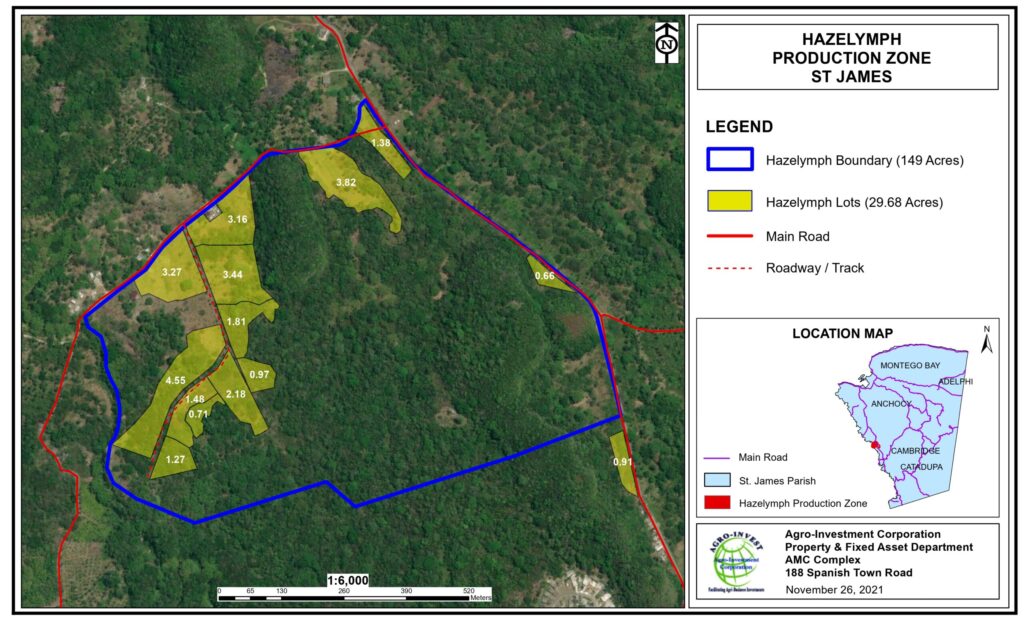
The Hazelymph Production Zone, located in the parish of St. James, lies within close proximity to Montego Bay, giving it excellent access to major ports, highways, and commercial centres. The area benefits from reliable road infrastructure and access to utilities, making it suitable for agricultural production and distribution. The land is gently undulating with moderate slopes that provide natural drainage and support mechanized farming. The soil is predominantly loamy clay, well-drained and moderately fertile, ideal for a diverse range of crops when properly managed.
Currently, the zone produces vegetables such as tomato, sweet pepper, and callaloo, along with root crops like yam and cassava. There is also increasing interest in tree crop production, including breadfruit and mango, to enhance Agro diversification. With its favourable conditions and logistical advantages, Hazelymph is earmarked for expansion into orchard crops and herbs targeting domestic and export markets.
2. New Pen Production Zone – St. Mary
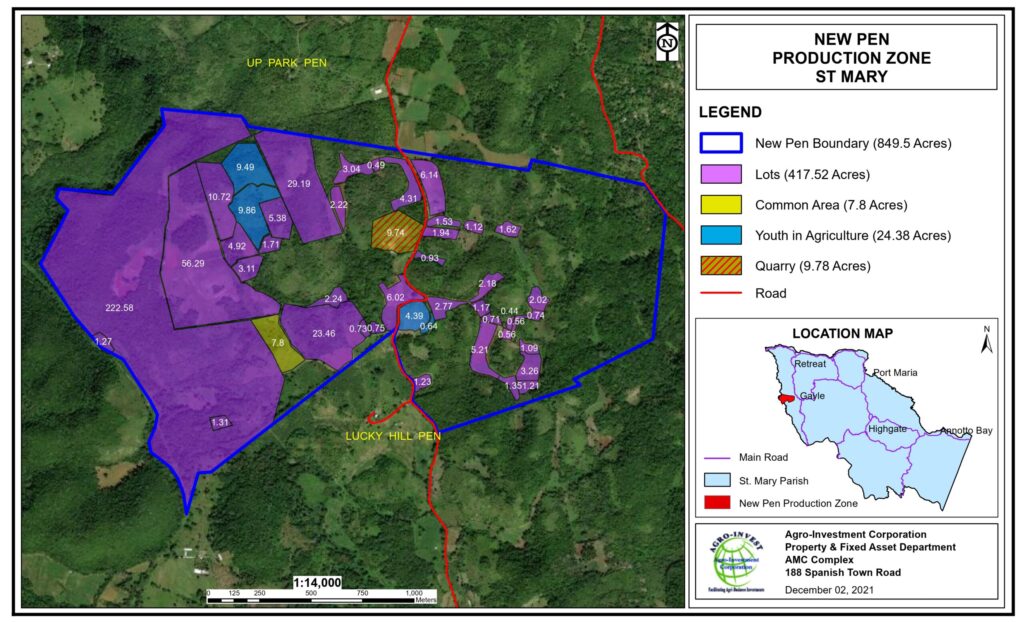
Situated in eastern St. Mary, the New Pen Production Zone enjoys a lush agricultural environment and close access to Annotto Bay and the coastal highway, ensuring efficient transportation of produce. The terrain is moderately rolling with gentle slopes, offering a good balance for cultivation and drainage. Its deep loam soils are well-drained and rich in organic matter, providing a strong foundation for both annual and perennial crops. The region’s consistent rainfall further enhances its suitability for a range of crops.
New Pen currently supports coconut, banana, pineapple, and Irish potato production, along with root crops such as turmeric and ginger. Expansion plans are underway to introduce more orchard crops and spices, leveraging the area’s soil fertility and favourable microclimate. The zone is being positioned to strengthen its role in high-value crop production for both domestic and export markets.
3. Lennox/Low Leyton Production Zone – Portland
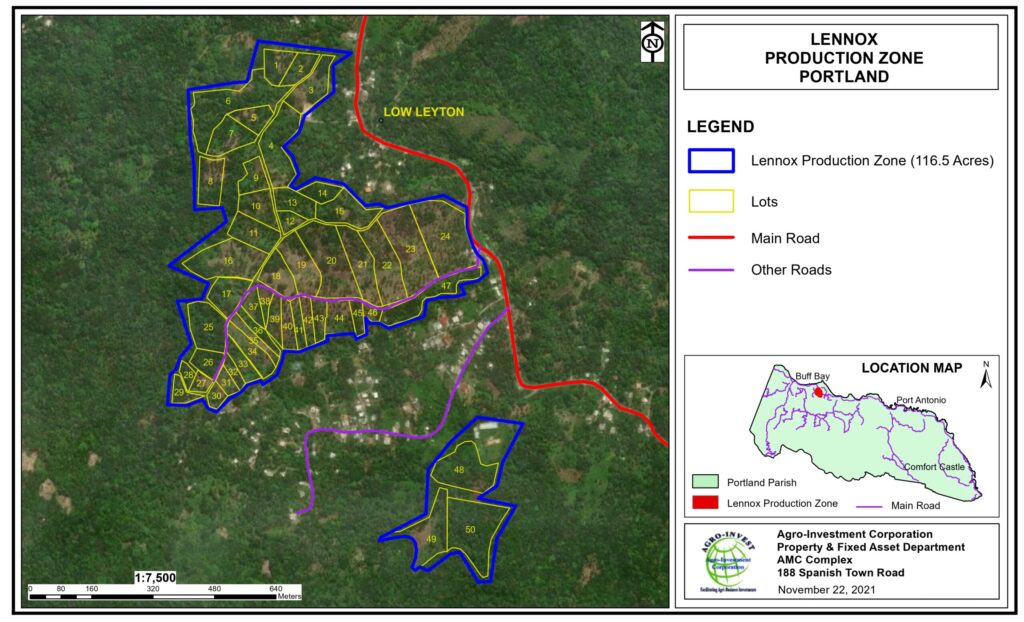
Located in the fertile parish of Portland near Buff Bay, the Lennox/Low Leyton Production Zone benefits from abundant rainfall, strong irrigation potential, and easy access to road networks. The topography is mainly flat to gently sloping, making it ideal for mechanized cultivation and efficient water management. The soil is a rich, well-drained alluvial loam, highly productive and suitable for a range of short- and long-term crops.
This production zone is recognized for its cultivation of banana and plantain, supported by the parish’s consistently high rainfall and fertile soils. Cocoa and turmeric are also grown extensively, and given the area’s favourable conditions, there are opportunities to diversify into coffee, ginger, and other high-value specialty crops. The zone is earmarked for continued development as a key site for sustainable, export-oriented agricultural production.
4. Rhymesbury Production Zone – Clarendon
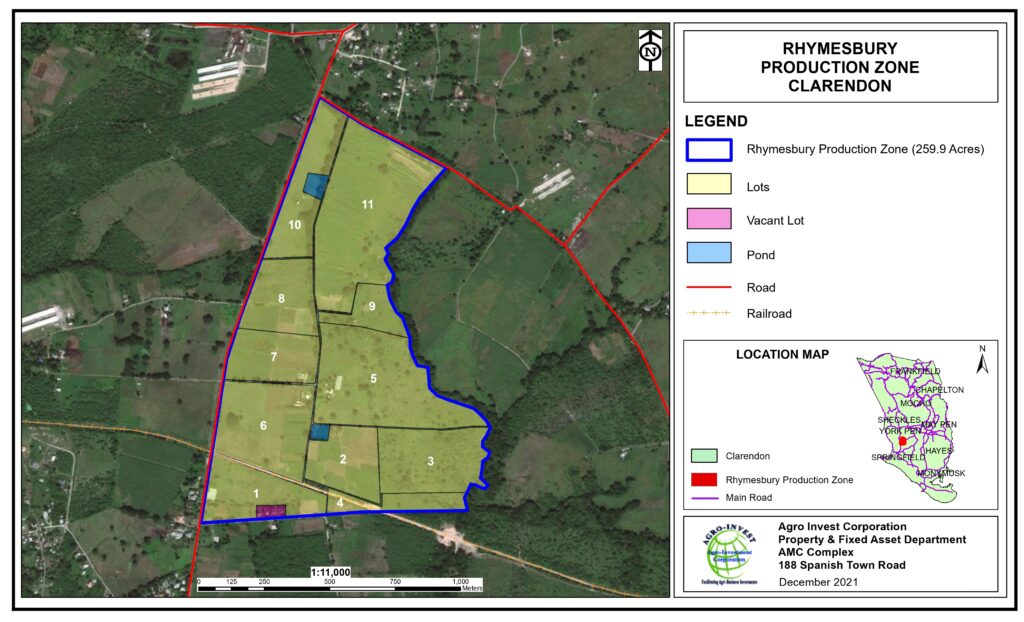
The Rhymesbury Production Zone is situated in the agricultural heart of Clarendon, south of Lionel Town, and is supported by well-established irrigation systems, including proximity to the Milk River. Its flat terrain makes it highly suitable for large-scale, mechanized agricultural operations. The soil is predominantly clay loam, highly fertile, and possesses excellent water-holding capacity, providing ideal conditions for a range of irrigated crops.
The zone currently produces onions, melons, sweet corn, and hot peppers and is well suited to continued expansion in cash crop production. There is also potential for integrating livestock feed cultivation and seedling nurseries to support other Agro Parks. Rhymesbury remains one of the key areas targeted for increased productivity through climate-smart and irrigation-based farming practices.
5. Hinds Town Production Zone – St. Ann
Located near Brown’s Town, the Hinds Town Production Zone enjoys easy access to regional markets and transportation corridors along the north coast. The land is characterized by undulating to hilly terrain, offering excellent natural drainage and suitable areas for small-scale mechanized operations. The soil is mainly loamy clay with limestone influences, which supports diverse agricultural uses when managed with proper soil conservation techniques.
Yam, sweet potato, and Irish potato are the primary crops grown, complemented by fruit trees such as mango and breadfruit. The area has shown strong potential for greenhouse production and high-value crop cultivation. With its proximity to major towns and good infrastructure, Hinds Town is positioned as a dynamic agricultural hub within St. Ann.
6. Wallens Production Zone – St. Catherine
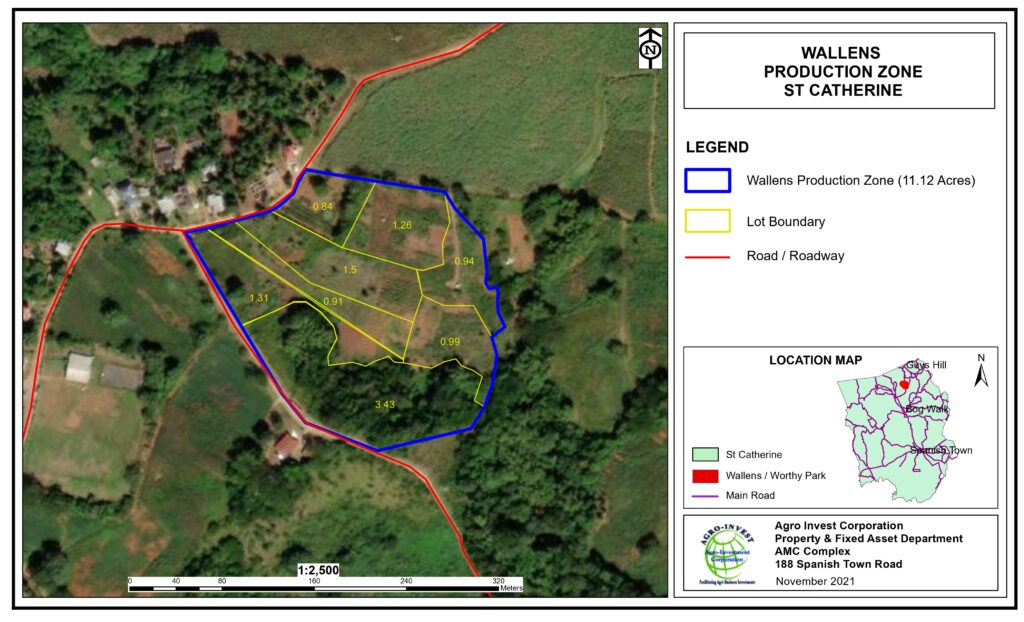
The Wallens Production Zone is located near Bog Walk in the western section of St. Catherine, offering excellent access to transportation networks and urban markets via the Ewarton–Spanish Town corridor. The topography is moderately sloping, with good drainage and fertile land conducive to both traditional and modern agricultural practices. Its loam soil composition supports high productivity, particularly for vegetable and fruit crop systems.
The zone currently produces a range of vegetables such as tomato, cabbage, and lettuce, as well as banana and root crops. Plans are underway to introduce herbs and develop integrated systems that combine crop and small livestock farming. Wallens is strategically positioned to serve as a demonstration site for sustainable, mixed-use agricultural production.
7. Enfield Production Zone – Westmoreland
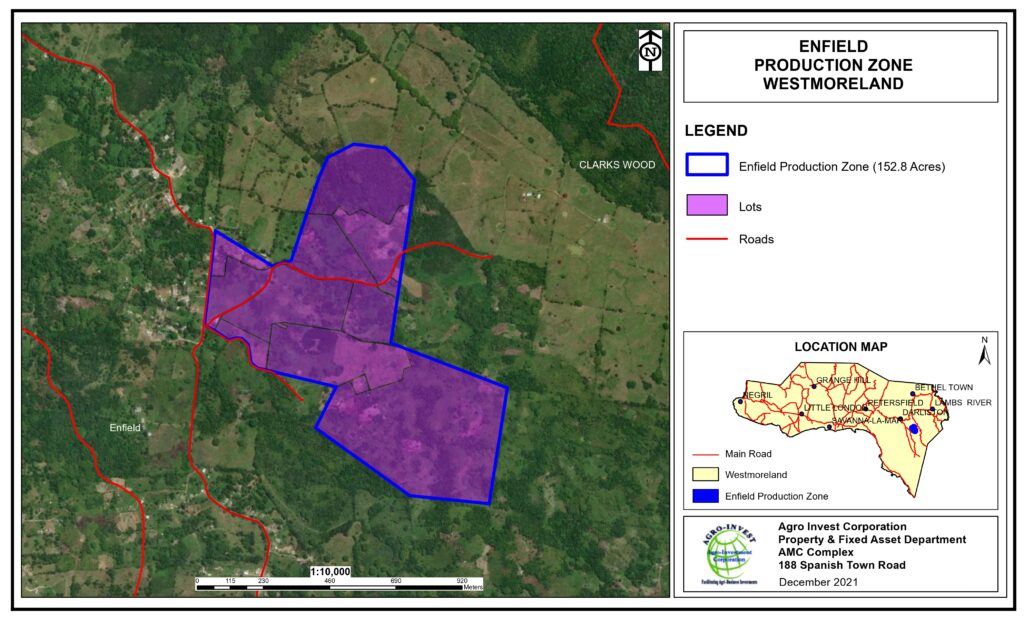
Situated in the central region of Westmoreland near Bethel Town and Petersfield, the Enfield Production Zone benefits from the parish’s strong agricultural tradition and favourable climatic conditions. The landscape is mainly flat to gently undulating, providing excellent opportunities for mechanized operations. Its sandy loam soils are well-drained, easy to till, and retain adequate moisture for crop cultivation.
The zone currently produces vegetables, melons, cassava, and yam, and is being targeted for expansion into orchard crops such as breadfruit and ackee. With supportive infrastructure and access to local markets, Enfield is poised for growth in diversified crop production and value-added processing initiatives.
8. Nonsuch/Unity Production Zone – St. Mary
The Nonsuch/Unity Production Zone lies inland from Port Maria and benefits from high rainfall and fertile valleys ideal for diverse agricultural activities. The terrain consists of rolling hills and flat plains, which allow for a mix of contour and flatland farming systems. The soils are deep, well-structured, and rich in organic matter, supporting high productivity with proper management.
The zone currently supports cocoa, banana, turmeric, and a range of root crops, with strong potential for fruit tree expansion and ginger cultivation. Its combination of good rainfall, fertile soil, and topography makes it well suited for both traditional and export-oriented agricultural ventures.
9. Hermitage Production Zone – St. Ann
Located near Discovery Bay, the Hermitage Production Zone benefits from proximity to Jamaica’s northern coastal corridor, giving it both agricultural and agritourism potential. The land is gently sloping, providing natural drainage and easy access for mechanized farming. The soil is primarily loam to sandy loam, moderately fertile and responsive to fertilizers and organic amendments.
Hermitage currently produces hot pepper, sweet pepper, pumpkin, and fruit trees such as mango and citrus. Plans are in place to expand greenhouse vegetable cultivation and promote sustainable, high-value crop systems. The zone’s strategic location positions it well for linkages to the tourism sector and Agro-processing enterprises.
10. Fort George Production Zone – St. Mary
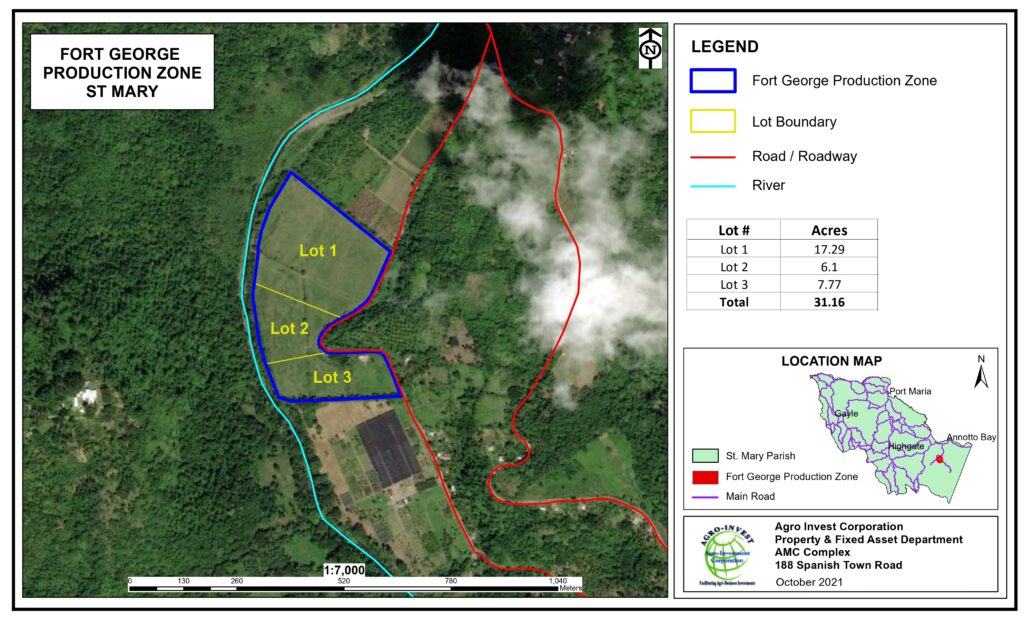
Fort George is located along the northeastern coastline of St. Mary near Port Maria, an area with strong potential for export-oriented agricultural ventures. The terrain is generally flat to gently sloping, making it highly conducive to mechanization and efficient cultivation. The soil is a fertile alluvial loam with excellent drainage and nutrient availability, supporting a range of crops.
The area currently produces pineapple, turmeric, and vegetables, with development plans focusing on coconut and orchard crop establishment. Fort George is being developed as a modern, export-driven agricultural zone with emphasis on productivity and sustainability.
11. New River Production Zone – St. Elizabeth
The New River Production Zone is located in the heart of Jamaica’s breadbasket parish, close to New Market and Junction, two major agricultural centres. The terrain is flat to gently undulating, which facilitates large-scale open-field farming and the use of mechanized equipment. The soil is predominantly sandy loam with good drainage and moderate fertility, ideal for vegetable and fruit crop cultivation.
Current production includes tomato, melon, cucumber, and scallion, while expansion plans are exploring papaya and other export-oriented crops. The New River area continues to demonstrate strong potential for productivity, with ongoing initiatives to introduce water-efficient and climate-resilient farming techniques.
12. Dundee Production Zone – Trelawny
Located near Duncans in northern Trelawny, the Dundee Production Zone benefits from established road and irrigation infrastructure linking it to Montego Bay and Falmouth. The land features gently undulating plains suitable for both manual and mechanized cultivation. The soil is a fertile clay loam with good moisture retention and structure, supporting a wide range of crops.
Major crops include yam, sweet potato, dasheen, and plantain, with future diversification into vegetable crops and seedling propagation. The Dundee Zone is recognized for its potential in root crop production and is being positioned to play a key role in strengthening Jamaica’s domestic food security.
13. Harmony Hall/Mount Pleasant Production Zone – St. Ann
The Harmony Hall/Mount Pleasant Production Zone is located between Ocho Rios and Claremont, providing excellent access to the tourism corridor and nearby Agro Parks. The terrain is rolling with areas of flat land suitable for diverse agricultural production. The soil is a limestone-based loam that is well-drained and moderately fertile, allowing for both perennial and short-term crops.
This zone currently supports tree crops such as mango, avocado, and breadfruit, along with vegetables and root crops. Plans for expansion include high-value crops for both domestic consumption and export. With its strategic location and favourable conditions, Harmony Hall/Mount Pleasant is poised to become a leading centre for sustainable, mixed-crop agricultural production in St. Ann.